Dental Software Development

Custom software for dental practices, dental groups and the companies building products for them: scheduling by chair and provider, recall, missed-call follow-up, insurance claims and revenue, from the team that built Smart Dentist.

At a glance

Discipline
Software & SaaS
Typical technology
Next.js, NestJS, TypeScript
Related work
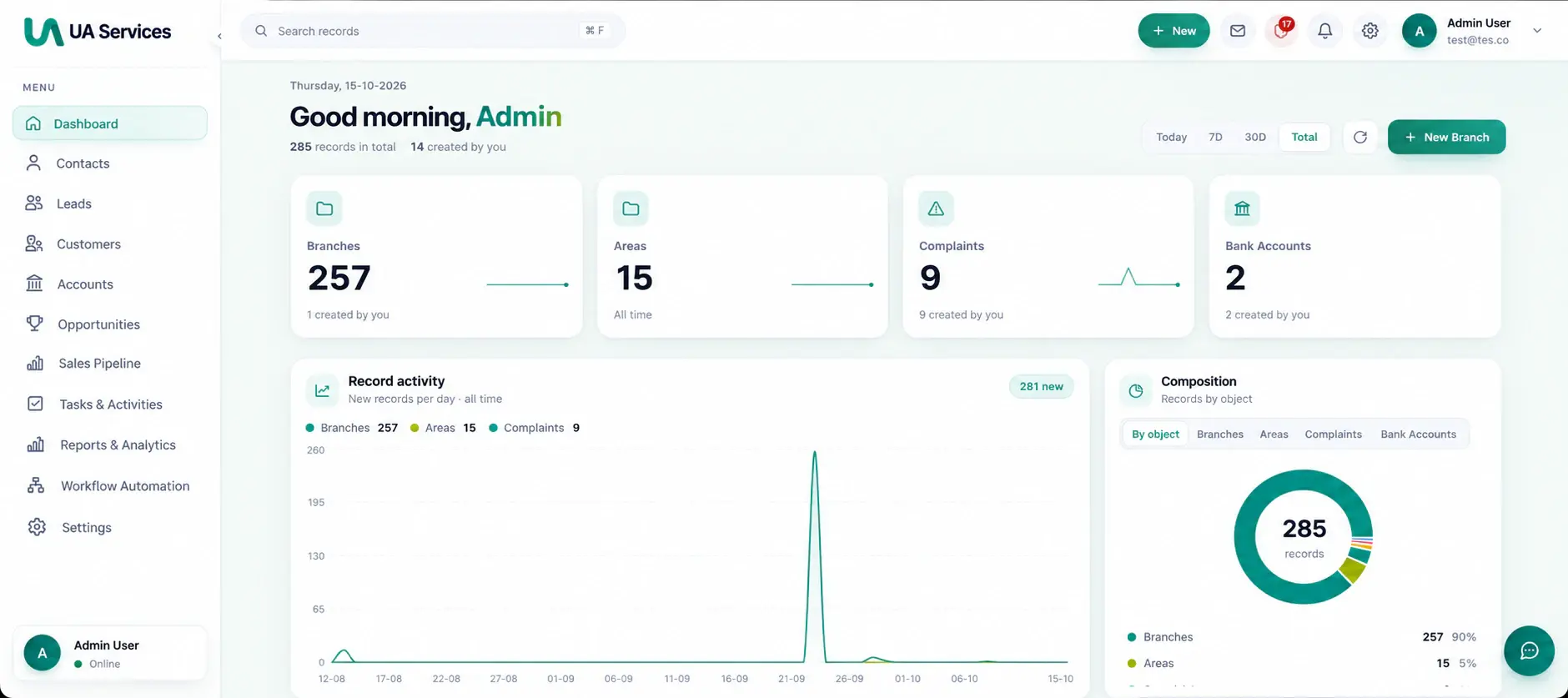
Smart Dentist, UA Services CRM
First reply
Within one business day

Our view

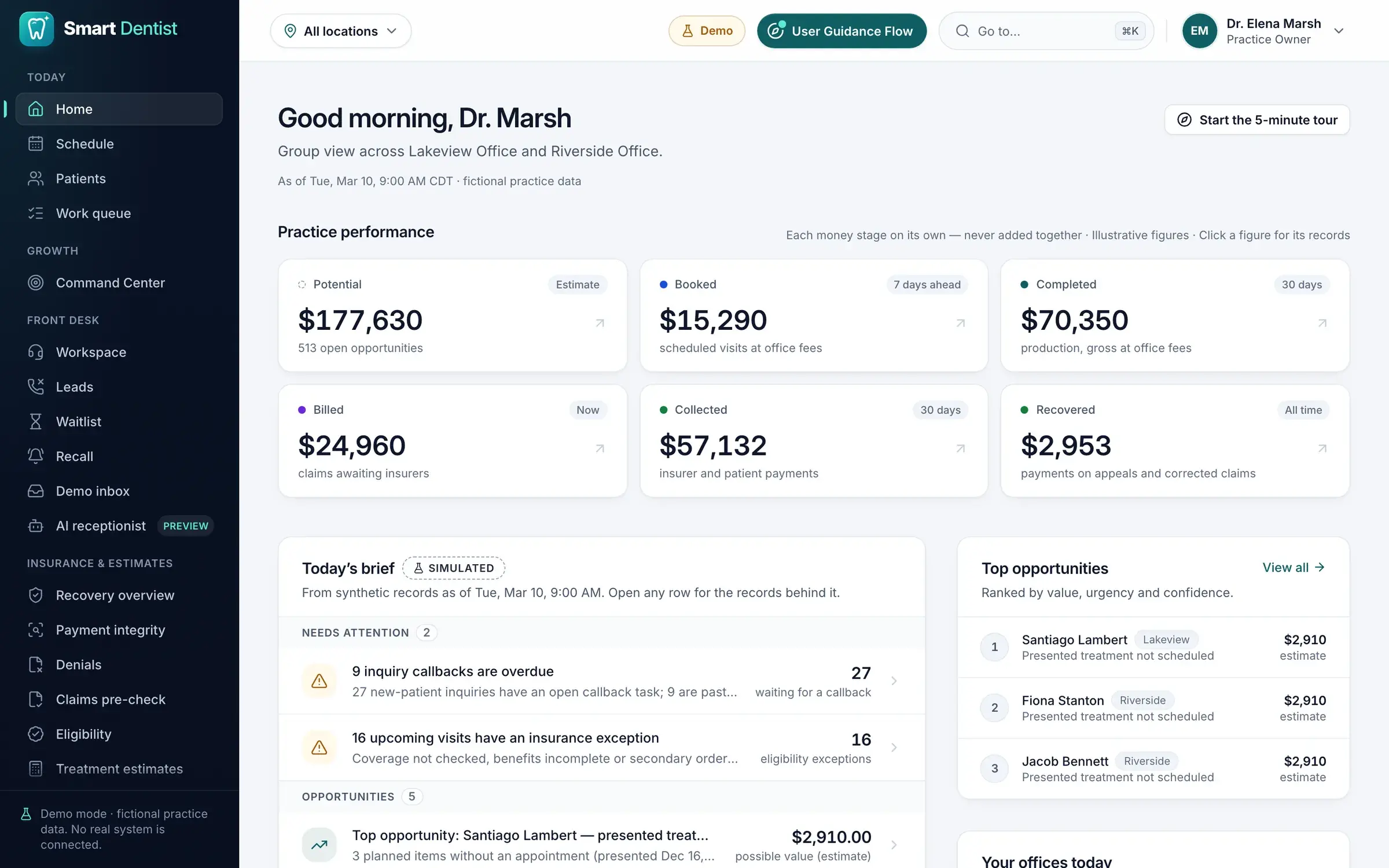
Dental practices lose patients and revenue in the gaps between systems: a missed call nobody returns, an empty chair after a cancellation, a patient past their recall date, an insurance payment that arrives short. We learned where those gaps are by building Smart Dentist, our own practice management and growth platform, in which the owner, the front desk and billing each get a workspace built around their day. Custom dental software from us follows the same pattern: one record of the practice, a workflow with an owner and a next action for every gap, and AI that suggests while authorized staff decide.

What we build

What we build.

Usually a 4⁠–⁠6 week foundation phase, then continuous delivery in two-week sprints.

  1. 01

    Practice management platforms

    Patient records, a schedule by chair and provider, a smart waitlist, cancellation recovery and recall, for one office or several.

  2. 02

    Front desk and new patients

    Missed-call recovery, new-patient inquiries with an owner and a next action, overdue callbacks and patient communication.

  3. 03

    Insurance and revenue

    Claims, underpayments and denials tracked by stage, eligibility, cost estimates, and appeal drafts that authorized staff approve.

  4. 04

    Workspaces for every role

    The owner, the front desk and the billing coordinator each see their own priorities, with role-based access across every location.

  5. 05

    AI for practice growth

    A daily brief of what needs attention, and open opportunities ranked by estimated value, urgency and confidence.

  6. 06

    Products for dental software companies

    Multi-location platforms with branding per practice and an architecture ready for integrations, for teams selling software to practices.

How we deliver

How a project runs.

  1. Map the practice

    How the owner, the front desk and billing spend their day, which systems they rely on, and where patients and revenue slip through.

  2. Design each role’s workspace

    Clickable designs of the screens each role uses, tested with the people who will use them.

  3. Build the core workflows

    Scheduling, patients, leads and insurance built in sprints, with role-based access from the first sprint and a demo every week.

  4. Connect and launch

    The systems the practice keeps connected through what each one allows, records migrated in rehearsed stages, then a quiet launch with monitoring.

  5. Add AI where it helps

    Briefs, ranked opportunities and drafts added once the workflows run, with staff approving anything that leaves the practice.

What you can count on

  • Role-based access for every staff role
  • Staff approve AI drafts before they are used
  • Patient data protection designed in from the start
  • Code, data and IP owned by you

Typical technology

  • Next.js
  • NestJS
  • TypeScript
  • MySQL
  • Prisma

Related work

Products we’ve built.

Dental practices
01Smart Dentist

A practice management and revenue growth platform we designed and built for dental clinics: patients, appointments, insurance claims and daily operations in one place, with AI that surfaces the opportunities a busy practice misses.

  • Next.js
  • NestJS
  • TypeScript
  • MySQL
  • Prisma
CRM & SaaS
02UA Services CRM

A multi-tenant CRM where business processes run through a visual, no-code flow builder, with AI that scores leads, routes complaints and drafts emails and SMS.

  • React
  • NestJS

Dental Software Development · Questions

Questions, answered.

Something else on your mind? An engineer replies within one business day.

Ask an engineer

Most single practices should buy: established practice management systems cover charting, scheduling and billing. Custom software pays off for groups whose workflows the market doesn’t serve, for practices that want one workspace across several tools, and for companies building a product to sell to practices. Our build vs buy guide sets out the criteria and the five-year cost.

Usually, through whatever the system offers: an API, a database export or scheduled files. Some practice management systems are more open than others, so we check what yours allows before scoping, and build the new workflows beside it rather than replacing what already works.

In the US, software that stores or sends patients’ health information for a practice handles protected health information, so HIPAA applies to the practice and to the vendors acting for it. Compliance comes from how the software is built and run: access controls, audit logs, encryption, hosting providers that sign a business associate agreement, and the practice’s own policies. No official certification exists for it; we design for these safeguards from the first sprint.

A fictional two-office practice on synthetic data: the owner’s home screen, the Growth Command Center, the schedule by chair, leads, insurance recovery, practice settings and a simulated AI receptionist. Communications are simulated, and nothing is connected to real practice, insurance, phone or payment systems.

Start a project

Planning dental software? Let’s talk it through.

Tell us what you’re building and where you’re stuck. A senior engineer will reply within one business day with honest questions and a suggested first step.

What happens next

  1. 01We review your briefAn engineer reads every message and replies within one business day.
  2. 02Discovery callAbout 30–45 minutes on your goals, constraints and what a good outcome looks like.
  3. 03Written proposalScope, approach, team, timeline and an estimate. No charge and no obligation.