AI Agent Development

AI agents that read, decide and act across your systems: workflows with an AI step, knowledge assistants that cite their sources, and tool-using agents with approvals where the stakes are high.

At a glance

Discipline
AI & Automation
Typical technology
OpenAI, Claude, LangChain
Related work
Smart Dentist, UA Services CRM
First reply
Within one business day

Our view

“AI agent” covers anything from one model call inside an ordinary workflow to a system that plans its own steps and acts in your CRM or billing system. We start with the simplest design that can do the job, build an evaluation set from your real cases before choosing a model, and add autonomy only when the numbers show the simpler version works. Every agent we ship logs what it did, stays within agreed cost and latency budgets, and hands uncertain cases to a person.

What we build

What we build.

Usually a 2⁠–⁠4 week assessment and working prototype, then iterative delivery against the evaluation set.

  1. 01

    Workflows with an AI step

    A fixed sequence of steps where a model does one part (classify, extract, summarize or draft), such as reading invoices and flagging the uncertain ones for review.

  2. 02

    Knowledge assistants (RAG)

    Assistants that answer from your own documents and data, respect the permissions people already have and show the source of every answer.

  3. 03

    Tool-using agents

    Agents that decide which steps to take, call your systems through tools and work until the task is done, with approval steps where mistakes are costly.

  4. 04

    AI inside your product

    Lead scoring, complaint routing, drafted emails and in-app assistants built into the software your team or your customers already use.

How we deliver

How a project runs.

  1. Choose the use case

    A frequent, rule-heavy task with recorded outcomes and one owner, ranked against other candidates by time saved and risk.

  2. Build the evaluation set

    Real examples from your tickets, documents or conversations, with success criteria agreed before anyone writes a prompt.

  3. Prototype the simplest design

    Usually a workflow with an AI step or a knowledge assistant, scored against the evaluation set, then a go, iterate or stop decision.

  4. Add tools, approvals and tracing

    Permissions, step limits, approval steps and tracing, so you can always see what the agent did and why.

  5. Run and maintain it

    Monitored in production against its cost and latency budgets, with the evaluations re-run whenever a model or one of your systems changes.

What you can count on

  • Providers that don’t train on your data
  • Access that mirrors your existing permissions
  • Approval before high-stakes actions
  • Evaluations re-run when a model changes

Typical technology

  • OpenAI
  • Claude
  • LangChain
  • RAG
  • Python
  • n8n

Related work

Products we’ve built.

Dental practices
01Smart Dentist

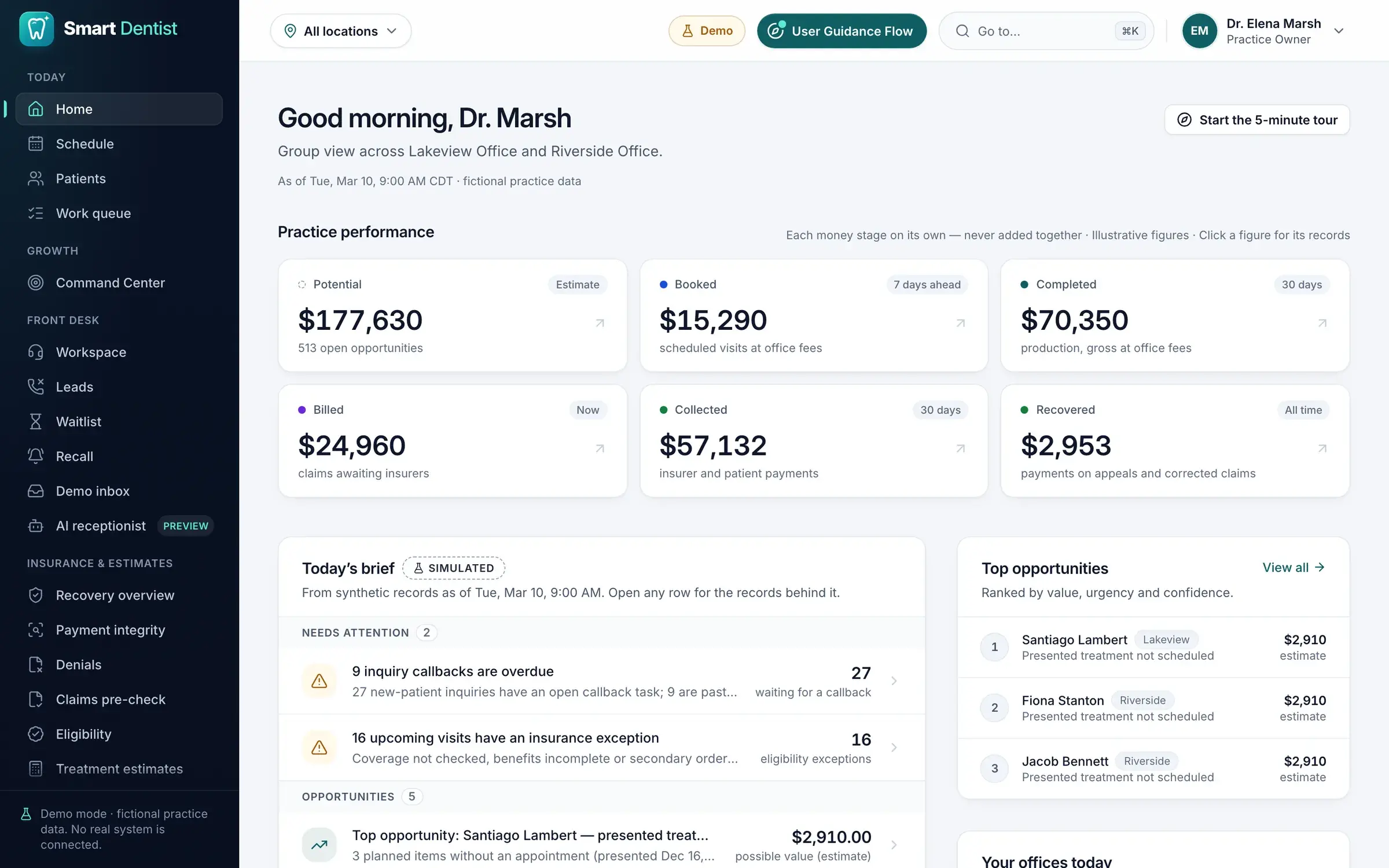
A practice management and revenue growth platform we designed and built for dental clinics: patients, appointments, insurance claims and daily operations in one place, with AI that surfaces the opportunities a busy practice misses.

  • Next.js
  • NestJS
  • TypeScript
  • MySQL
  • Prisma
CRM & SaaS
02UA Services CRM

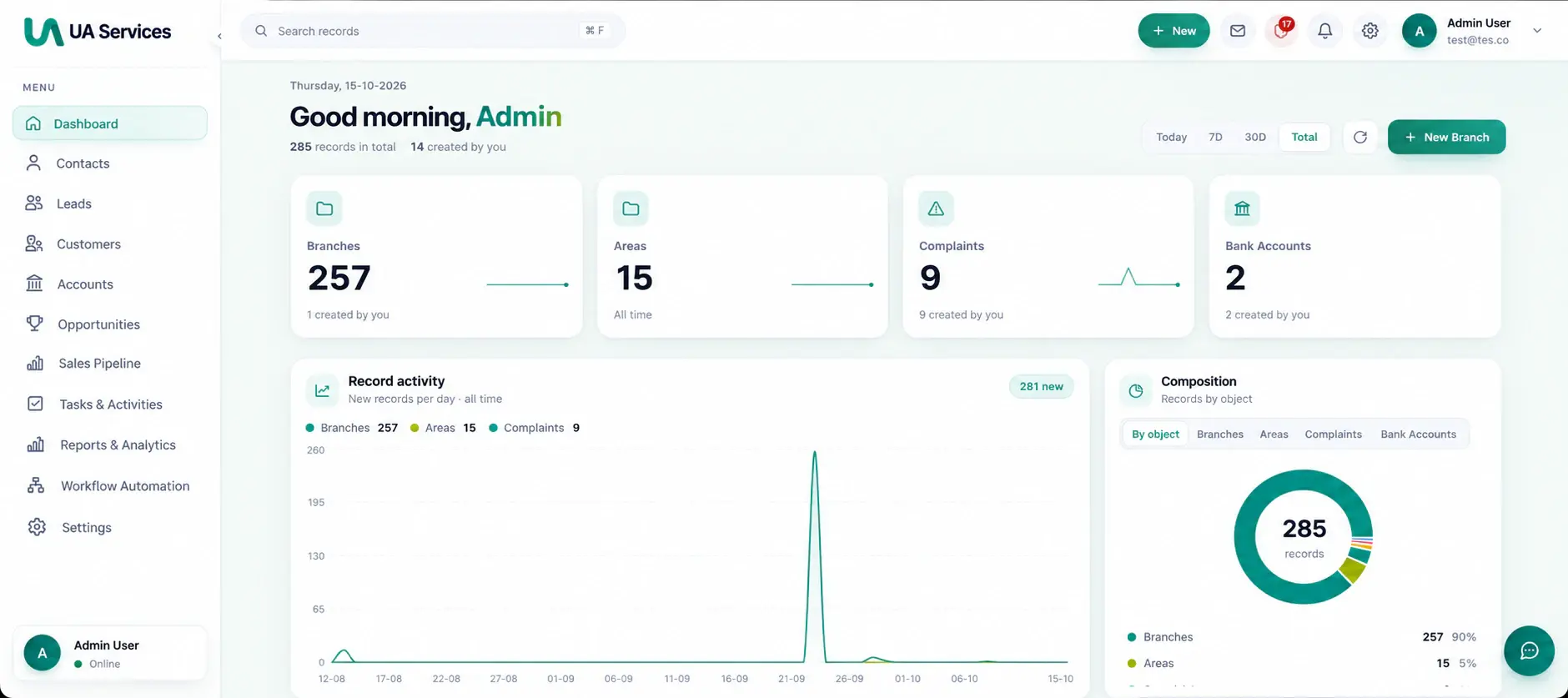
A multi-tenant CRM where business processes run through a visual, no-code flow builder, with AI that scores leads, routes complaints and drafts emails and SMS.

  • React
  • NestJS

AI Agent Development · Questions

Questions, answered.

Something else on your mind? An engineer replies within one business day.

Ask an engineer

A workflow follows steps you define, with a model doing one part of the work, so it makes a known number of model calls and can be priced per item before it is built. An agent decides which steps to take and calls your systems itself. That suits open-ended tasks, but it costs more to run and needs approvals, step limits and tracing. Most projects should start with the workflow.

It depends mostly on which kind you need and on the work around the model: integrations, the evaluation set, guardrails and the human review step. Our AI agent development cost guide gives effort ranges for each type and the monthly running costs, with every assumption stated. After a short discovery we give you a written estimate for yours.

The one that scores best on your evaluation set at an acceptable cost, from OpenAI, Anthropic or another provider. Because every feature has its own evaluation set, a newer or cheaper model is adopted only when it measures better on your own cases.

Only where you decide the stakes allow it. Agents hand uncertain cases to a person, and actions such as changing records or sending messages can require an approval first. Every step is logged, so you can see what the system did and why.

Start a project

Planning an AI agent? Let’s talk it through.

Tell us what you’re building and where you’re stuck. A senior engineer will reply within one business day with honest questions and a suggested first step.

What happens next

  1. 01We review your briefAn engineer reads every message and replies within one business day.
  2. 02Discovery callAbout 30–45 minutes on your goals, constraints and what a good outcome looks like.
  3. 03Written proposalScope, approach, team, timeline and an estimate. No charge and no obligation.