02UA Services CRM
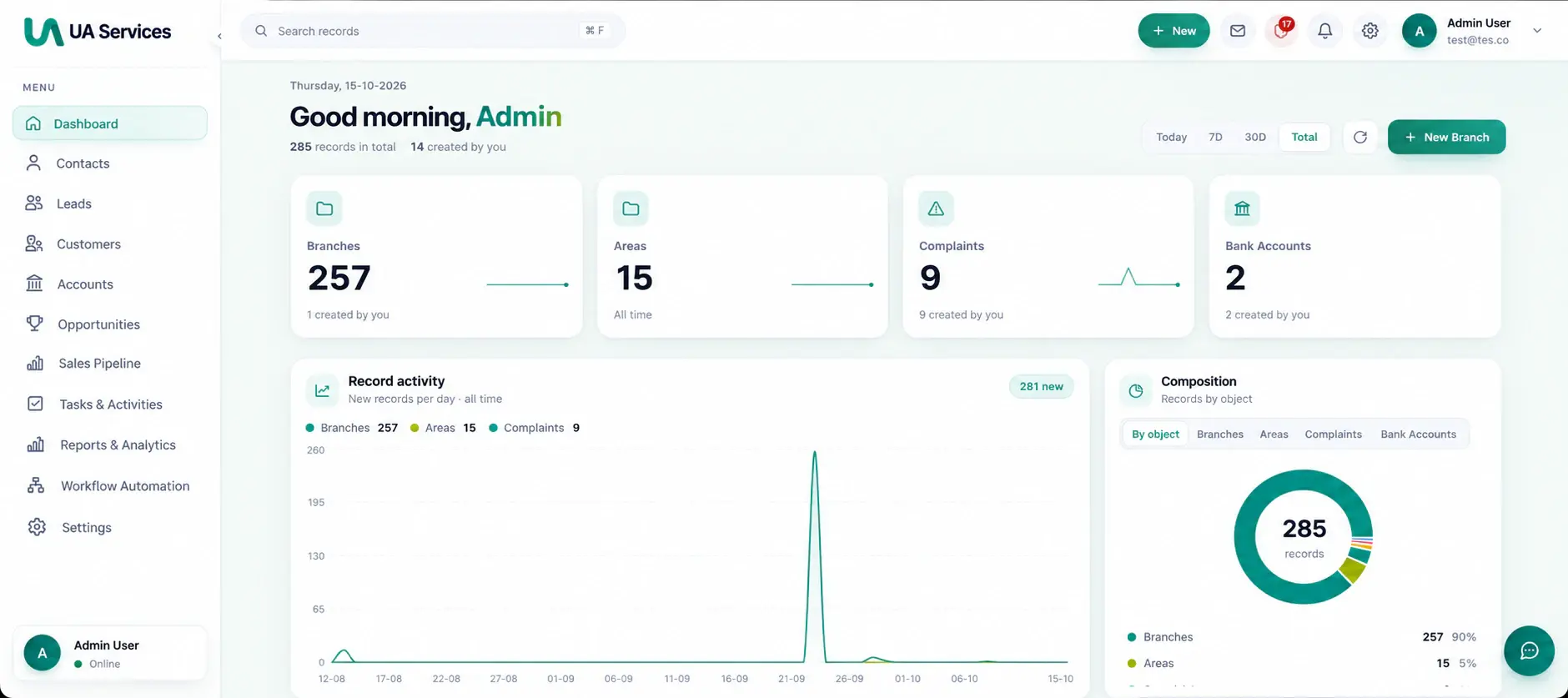
A multi-tenant CRM where business processes run through a visual, no-code flow builder, with AI that scores leads, routes complaints and drafts emails and SMS.
- React
- NestJS


SaaS product development from the first release to a multi-tenant platform: accounts and roles, separated customer data, subscription billing and the admin tools to run it.
At a glance
Our view
The decisions that are expensive to change in a SaaS product are made in its first weeks: how each customer’s data is kept apart, how roles and permissions work, and how plans and billing are enforced. We put tenancy in the data model from day one, use managed services for sign-in and payments rather than building our own, and invest early in automated tests and deployment, so adding a customer, a plan or a feature stays routine work.
What we build
Usually a 4–6 week foundation phase, then continuous delivery in two-week sprints.
Each customer organization in its own workspace, with its data kept separate in the data model, not only in the interface.
Sign-up, invitations, roles per organization and two-factor sign-in, on a managed authentication service.
Plans, checkout, usage limits and webhooks through a payment provider such as Stripe.
Workflows, fields and templates your customers set up themselves, so the product grows without changes to its core code.
Internal screens to manage users and organizations, and reporting on how the product is actually used.
How we deliver
User flows, the jobs the first release must do, and clickable designs of the core screens.
Repositories, environments, automated builds and deployments, monitoring, sign-in and tenancy.
Each job built with its screens, business rules, permissions and tests, and demonstrated every week.
Plans and payments, the admin screens, then a quiet launch with monitoring in place.
New features, plans and integrations added in two-week sprints on the same foundations.
Related work
A multi-tenant CRM where business processes run through a visual, no-code flow builder, with AI that scores leads, routes complaints and drafts emails and SMS.
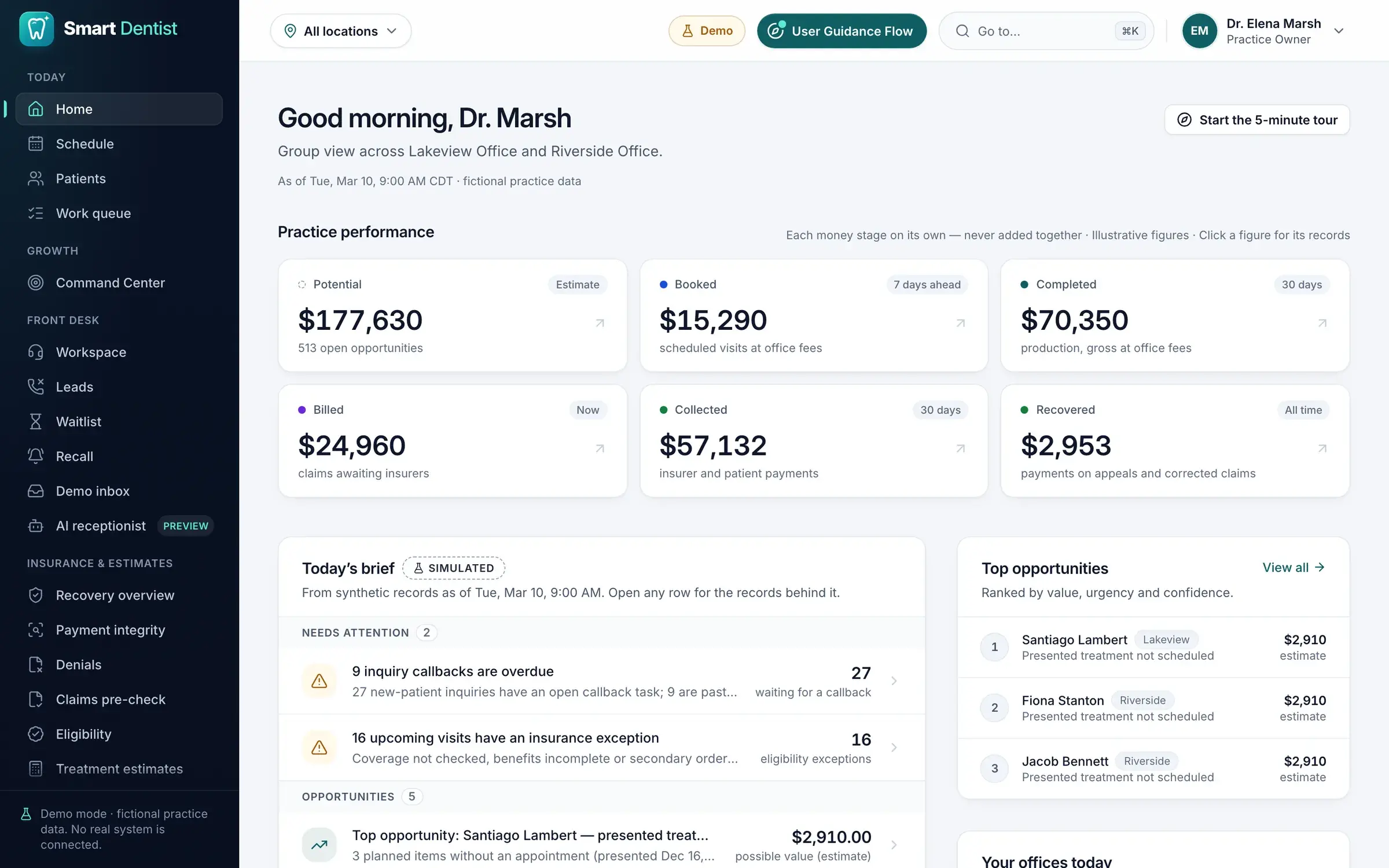
A practice management and revenue growth platform we designed and built for dental clinics: patients, appointments, insurance claims and daily operations in one place, with AI that surfaces the opportunities a busy practice misses.
SaaS Development · Questions
Something else on your mind? An engineer replies within one business day.
Ask an engineerFor most B2B products, yes: one platform, with each customer’s data kept separate. The separation belongs in the data model from the first release, because retrofitting it later touches most of the code that reads or writes data.
Rarely. Managed services for authentication and payments, such as Stripe for subscriptions, are secure, maintained and quicker to integrate than anything built from scratch. The engineering time is better spent on what makes your product different.
It depends on the number of core workflows and integrations, the platforms you need and how accounts and organizations work. Our MVP cost guide gives planning ranges per building block and a worked example of a B2B web product. After a short discovery we give you a written estimate with the team, timeline and assumptions.
Start a project
Tell us what you’re building and where you’re stuck. A senior engineer will reply within one business day with honest questions and a suggested first step.